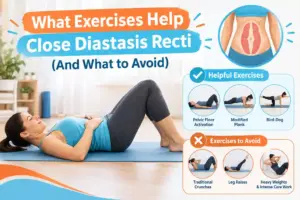
Pregnancy doesn’t just change your body on the outside—it reshapes what’s happening beneath the surface too.
Your abdominal muscles, which normally support your posture and core strength, gradually adapt to make space for your growing baby. Check Out Our LA-EMS Body Sculpting: Targeting Diastasis Effectively
These changes are natural, but understanding them week by week can help you feel more in control and better prepared.
Understanding Your Abdominal Muscles During Pregnancy
Your core is made up of several muscle layers, including the rectus abdominis (the “six-pack” muscles), obliques, and deeper stabilising muscles. As your uterus gradually grows, these muscles gently stretch and adjust to make space for your baby.
One common change is Diastasis Recti Wales—a natural process in which the abdominal muscles gradually separate along the midline. While it might sound worrying, it’s actually very common during pregnancy, especially as you move into the later stages.
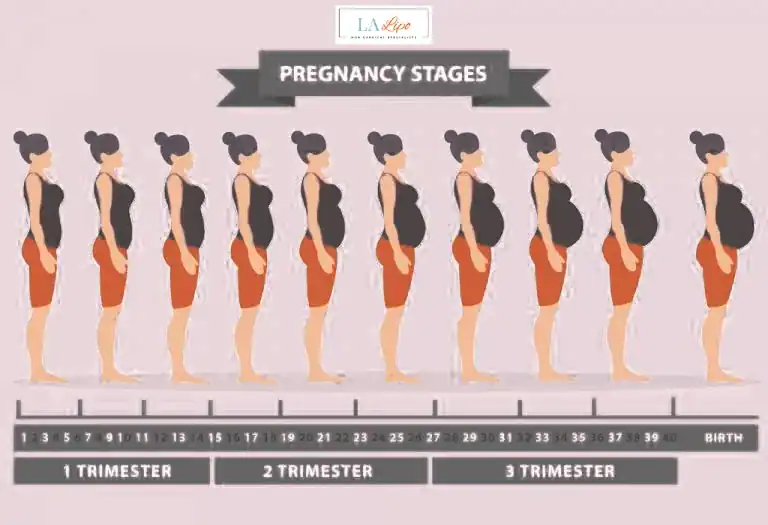
First Trimester (Weeks 1–12): Early Changes You Might Not Notice
A lot of the change that occurs in the first trimester is below the surface. Your uterus is still pretty tiny at this point, which means your abs aren’t really stretching yet.
But hormonal changes—especially the release of relaxin—start to gradually loosen up your connective tissues. And this prepares your body for the growth to come—whether you know it or not.
You might notice:
- Mild bloating
- Slight core weakness
- A sensation of pressure or tenderness
This is when your gut is silently prepping for what comes next. Check Out 10 Things to Avoid During Pregnancy to Protect Your Core Muscles
Second Trimester (Weeks 13–26): Visible Growth and Muscle Stretching
That’s when the changes become more apparent. When your belly expands, your abs start to stretch outwards.
The body nowadays adapts quickly:
- Enlargement of the uterus above the level of the pelvis
- Abdominal muscles lengthen and thin.
- Your alignment may change, which can burden your lumbar spine.
Others see a small gap in the middle of their stomach — an early indication of muscle separation. You might also notice your core losing some stability, especially when you move.
Third Trimester (Weeks 27–40): Maximum Stretch and Pressure
By that third trimester, your abs are straining to their max capacity. They have expanded as far as they can go, making room for your little one to grow.
At this stage:
- The separation between the muscles may become wide.
- Core strength is reduced.
- You may experience tension, heaviness, or pain in your belly.
When your joints are stiff, just getting out of bed or standing up feels more difficult. This is perfectly understandable, but this is also when the right support becomes really needed. See Our LA-EMS Body Sculpting To Get Your Dream Body
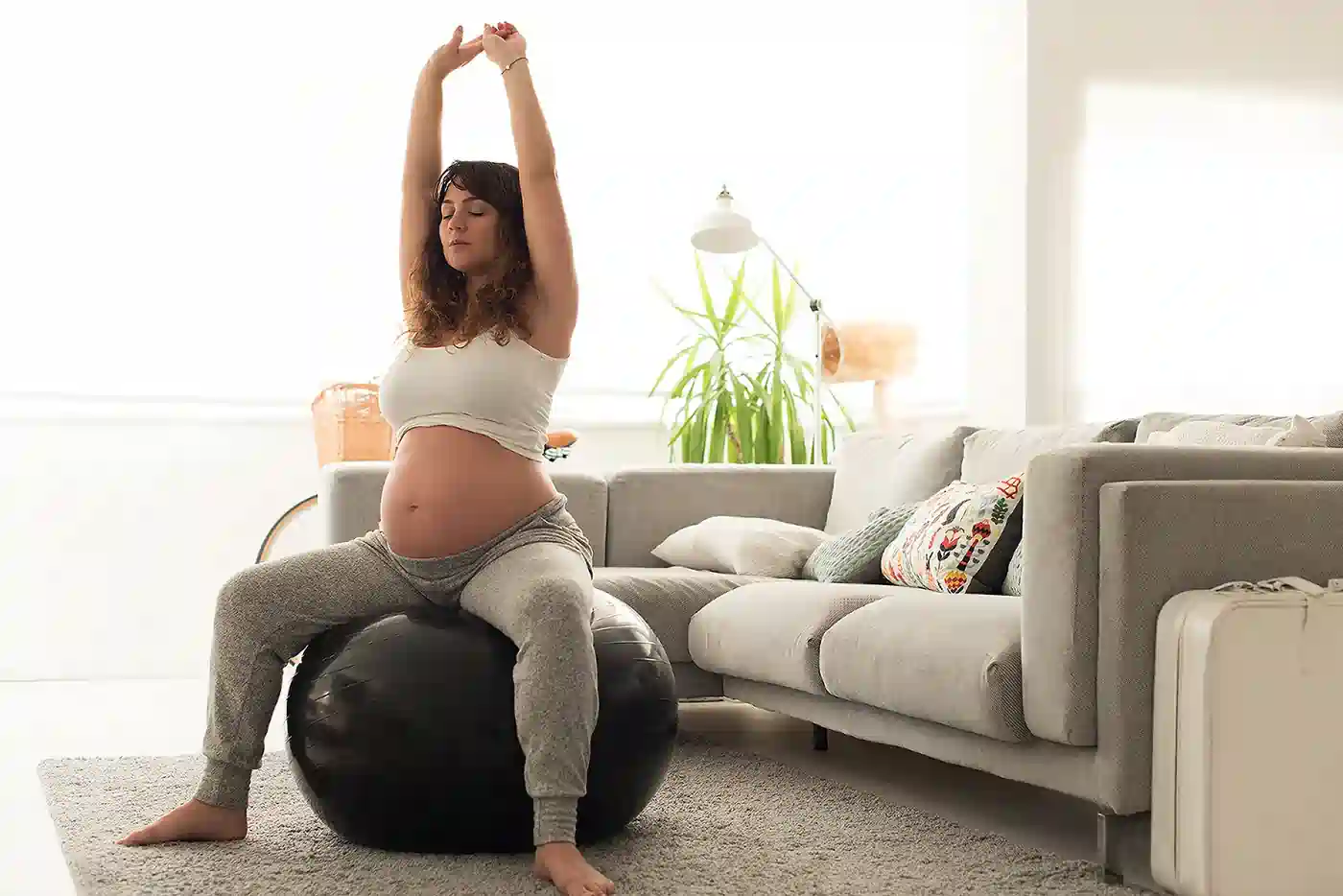
How to Support Your Core Safely During Pregnancy
Looking after your core during pregnancy isn’t about “keeping abs tight”—it’s about gentle support and stability.
Here are some practical ways to help:
- Focus on posture: stand tall and avoid slouching.
- Engage your core gently when moving (especially when lifting or rolling over)
- Try safe prenatal exercises, such as pelvic tilts or breathing exercises.
- Avoid intense abdominal workouts or crunches.
- Consider supportive garments if recommended.
It is more important to listen to your body than to follow a routine.
Week-by-Week Summary of Abdominal Changes
| Weeks | What’s Happening to Your Abdominal Muscles | What You Might Feel |
| 1–4 | Minimal physical change, hormonal shifts begin | Bloating, mild discomfort |
| 5–8 | Connective tissues start loosening | Subtle core sensitivity |
| 9–12 | Early internal expansion | Slight tightness |
| 13–16 | Muscles begin to stretch | Small visible bump |
| 17–20 | Continued muscle lengthening | Core feels weaker |
| 21–24 | Abdominal wall thins slightly | Mild back strain |
| 25–28 | Stretching becomes more noticeable | Increased pressure |
| 29–32 | Muscles expand further | Reduced stability |
| 33–36 | Peak stretching phase | Heaviness, discomfort |
| 37–40 | Maximum expansion before birth | Tightness, fatigue |
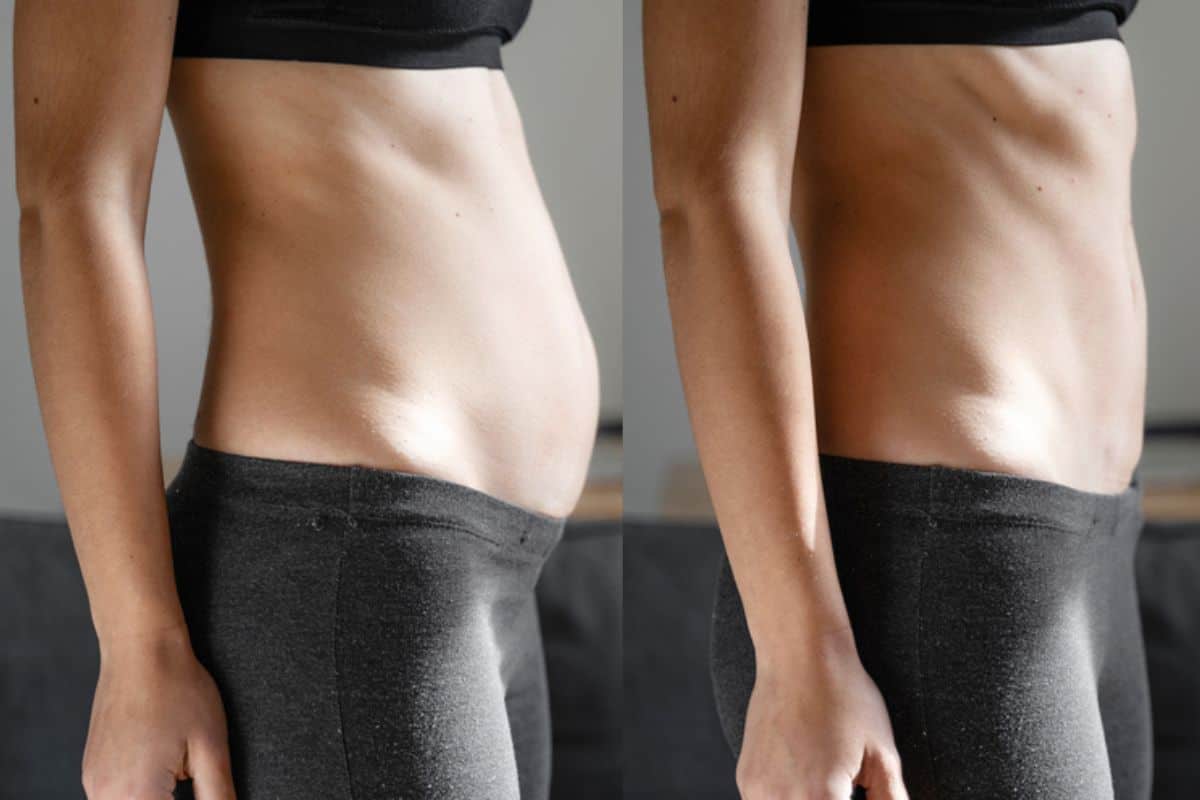
Post-Pregnancy: What Happens to Your Abdominal Muscles After Birth
Your body springs into recovery mode after you get that baby out, but it absolutely does not spring back overnight.
Your abdominal muscles Wales will gradually:
- In the third quarter, they started moving back towards the previous level.
- Regain strength over time.
- Heal from any separation.
For the other women (particularly those with Diastasis Recti), it could be a completely different story, which may take much longer to recover from and require assured exercises or professional help!
Patience is the word here, though; your body has done something amazing.
When to Be Concerned About Abdominal Muscle Changes
Changes are there which are mostly normal but sometimes worth of taking advice on.
Look out for:
- A split in your abdominal muscles after pregnancy
- Persistent lower back pain
- Difficulty engaging your core
- Any visible bulge whilst sitting up
As always, if something does not seem right, it is better to talk about it with a health professional.

Frequently Asked Questions
Q: I’ve been struggling with loose abdominal muscles after pregnancy, and I’ve heard about LA-EMS Body Sculpting Wales—can it actually help with rebuilding core strength?
Yes, you can help rebuild strength after injury by firing deep, hard muscle contractions you can’t engage in. But it works best alongside proper recovery and periodic training rather than as a total replacement.
Q: I’m considering LA-EMS Body Sculpting Wales after having my baby, but I’m worried if it’s too soon or unsafe—when is the right time to start?
It’s usually best to wait until after your postnatal check (around 6 weeks or a bit longer). It’s always a good idea to get the go-ahead from your healthcare provider first.
Q: I feel like exercise alone isn’t helping my stomach tighten after pregnancy—could LA-EMS Body Sculpting make a noticeable difference?
It can support muscle toning and improve engagement, especially when combined with a healthy routine.
Q: I’m worried about my abdominal muscle separation—can LA-EMS Body Sculpting help with conditions like Diastasis Recti Wales?
It may go a degree in strengthening surrounding muscles, but it isn’t really a treatment for sciatica. Usually, physiotherapy is required for proper recovery.
Q: I’ve never had any aesthetic treatments before—what does a session of LA-EMS Body Sculpting actually feel like?
It sort of feels like powerful controlled muscle contractions — but unlike during hard exercise, there is no strain or pain.
Q: I want to improve my post-pregnancy stomach but don’t want surgery—could LA-EMS Body Sculpting be a good non-invasive option for me?
It is a non-surgical alternative that focuses on muscle strengthening. Results are varied, but it can be a positive aspect of your recovery.
For Further Information, Please Call Us ON 03300 100 238